






Solutions for every step of patient care.
Collect visit fees, manage recurring plans, and simplify patient billing with a connected set of ACH and card tools, designed to work on their own or together.
TELEMEDICINE SOLUTIONS
telemedicine solutions
TELEMEDICINE SOLUTIONS
HOW TO GET STARTED
Get approved today
featured integrations



who we support
Built for every
telemedicine business
From startups to global brands, Paynote adapts to your business model and supports every category of e-commerce.


What we offer
Healthcare payment expertise
Navigate the complexities of telehealth with a payments partner that understands regulated industries. From recurring care models to high-risk billing, Paynote is built to support how modern healthcare businesses operate.
Banking relationships built for telehealth
Access a network of banking partners that support telemedicine and subscription-based care. We help you avoid common restrictions, improve stability, and unlock more flexibility than traditional processors.
Recurring billing for ongoing care
Support subscriptions, treatment plans, and recurring patient billing with ease. Automate payments for memberships, follow-ups, and long-term care—while reducing churn and missed payments.
Flexible payment methods for patients
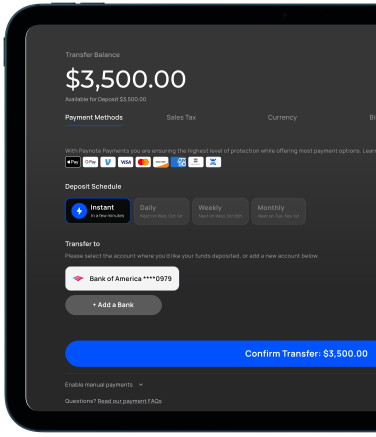
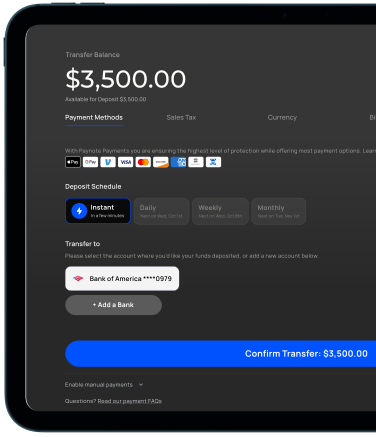
Offer card, ACH, and digital wallet options to meet patient preferences. Increase conversion rates while lowering processing costs with more efficient payment rails.
Faster settlements, stronger cash flow
Offer card, ACH, and digital wallet options to meet patient preferences. Increase conversion rates while lowering processing costs with more efficient payment rails.Faster Settlements, Stronger Cash Flow
You have questions, we have answers
Telemedicine
FAQs
Why are telehealth and telemedicine businesses considered high risk?
Payment processors often classify telehealth as high risk due to regulatory scrutiny, digital-only service delivery, and potential for chargebacks. Patients may dispute charges for services they didn’t understand or recognize, and strict HIPAA and healthcare regulations add complexity. Many traditional processors avoid these businesses altogether, making it critical to work with a payments partner that understands healthcare compliance.
What compliance requirements apply to telehealth payments?
Telehealth payments must follow PCI DSS for payment data security and align with HIPAA standards for patient privacy. Depending on your region, additional rules like GDPR (Europe) or state-specific telemedicine laws may apply. Processors that are HIPAA-aware and PCI-compliant ensure your platform can securely accept payments while protecting sensitive patient information.
Can telehealth platforms support recurring billing for subscriptions and prescriptions?
Yes. Many telehealth providers rely on subscription models for ongoing treatment plans, prescriptions, or recurring consultations. A strong payment partner offers flexible recurring billing that reduces declines, automates charges, and keeps revenue consistent — while also improving patient convenience.
How can telehealth providers reduce chargebacks and fraud?
Chargebacks are common in digital healthcare because patients often pay remotely. To reduce disputes, providers should use clear billing descriptors, maintain accurate medical records, and communicate pricing and treatment terms upfront. Fraud tools such as identity verification, transaction monitoring, and dispute management support are also critical to protecting both revenue and compliance.
Can telehealth businesses accept international patients?
Yes. Many telehealth services have global demand, especially for specialized medicine or counseling. To serve international patients, your processor should support multi-currency payments, cross-border compliance, and localized methods like ACH equivalents or international card networks. This ensures patients can pay easily while providers remain compliant and receive reliable payouts.
for telemedicine
Get started on your all-in-one telemedicine merchant account today
Partner with experts who understand your industry.
Streamline payments for telemedicine with secure, reliable pay-ins and payouts. Accept ACH, cards, and digital wallets while reducing declines and simplifying recurring billing. With built-in compliance, risk controls, and chargeback management, deliver a seamless payment experience for both providers and patients.